
Scottish Govt Changes School Toilet Biological Sex Guidance
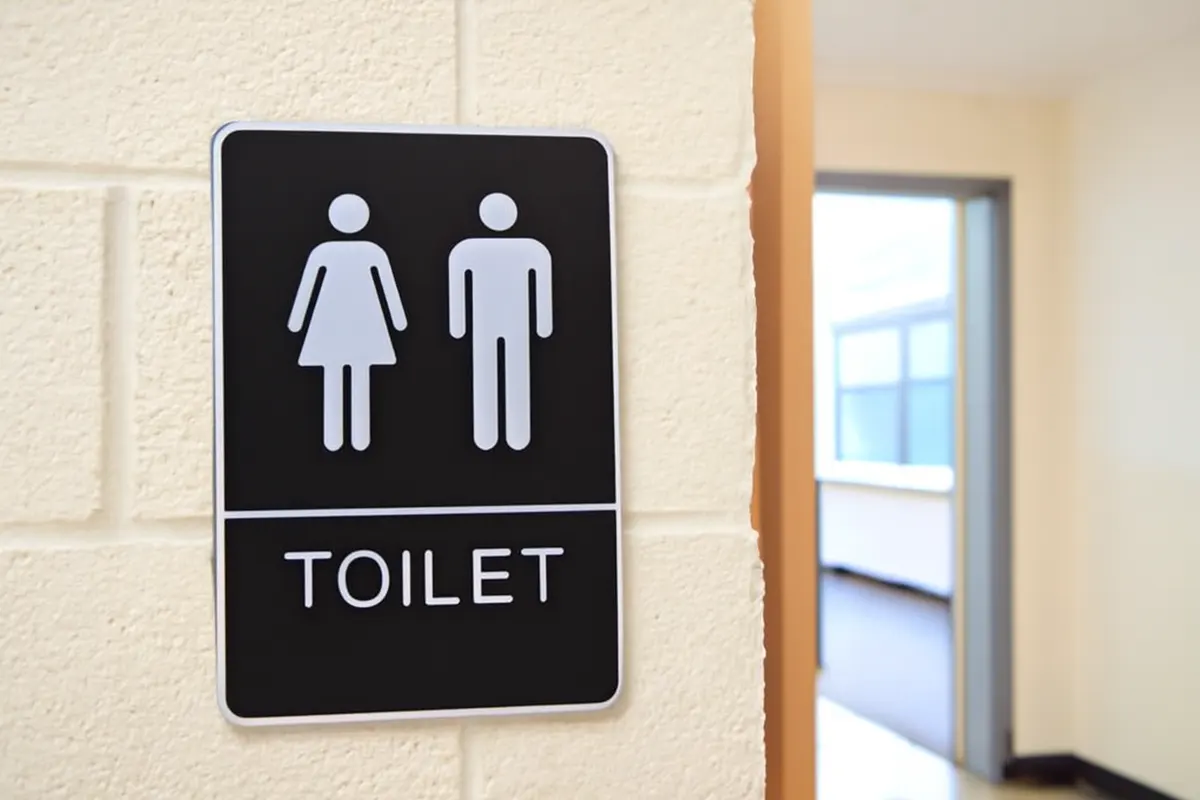
School Toilet Biological Sex Guidance
The Scottish Government has changed its guidance on school toilet facilities, now requiring separate provisions for boys and girls based on biological sex. This change follows legal rulings, including a Supreme Court decision, clarifying that toilet facilities should be assigned according to biological sex.
Key Changes in School Toilet Biological Sex Guidance
The updated guidance mandates that schools must provide separate toilet facilities for boys and girls according to biological sex. Previous guidelines did not permit limiting toilet access based on biological sex, and children who were gender-confused were not required to use facilities based on their sex assigned at birth. The updated guidance aligns with recent legal decisions.
Impact of Recent Legal Decisions
Recent rulings, including the UK Supreme Court‘s decision on the definition of ‘man’ and ‘woman’ and a Court of Session declaration, have clarified that schools must ensure single-sex toilet facilities. These legal decisions have prompted the Scottish Government to make changes to the guidance on toilet facilities in schools.
Transgender Pupils and Toilet Provisions
The guidance still supports transgender pupils, allowing for gender-neutral facilities where appropriate. However, Education Secretary Jenny Gilruth stated that the guidance is non-statutory, leaving local authorities to determine appropriate provisions on an individual basis.
Challenges and Controversies
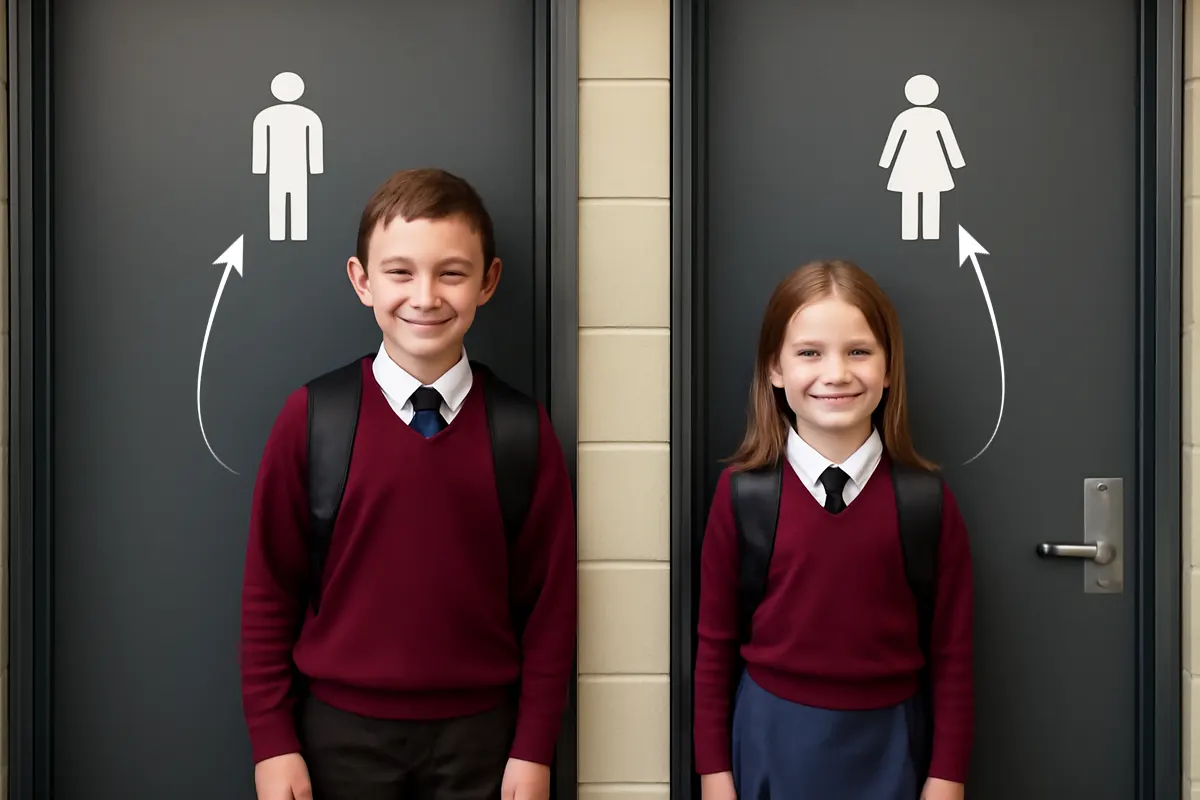
Male and Female Students from the United Kingdom
The updated guidance has sparked debate, especially around the introduction of gender-neutral toilets. Critics argue that such provisions contradict building regulations that require separate facilities for boys and girls. The case of Scottish Borders Council, which was challenged for providing only gender-neutral facilities, has further raised concerns.
Legal Duties for Schools
Schools are reminded to comply with the School Premises Regulations of 1967, which require equal facilities for boys and girls. Failure to follow these regulations could lead to legal challenges from parents.
The Role of the Cass Review
The Cass Review has highlighted concerns regarding social transitions, especially for pre-pubescent children. Schools are encouraged to incorporate insights from the Review to safeguard the wellbeing of all pupils while supporting transgender students.
Conclusion
The changed school toilet guidance in Scotland, now based on biological sex, aims to balance legal requirements with the needs of transgender pupils. However, the application of this guidance remains a topic of debate, as schools face challenges in providing equal facilities while respecting individual circumstances.
As the situation continues to evolve, schools must stay updated on their legal obligations and ensure they are providing a safe and supportive environment for all students.
Latest educational content from the UK

UK’s First Hindu School Achieves Outstanding Ofsted Rating
The UK’s first Hindu school, Krishna Avanti Primary School in Harrow, has achieved an exceptional milestone after being rated...

What age can a child walk to school on their own in the UK?
Allowing a child to walk to school independently is an important milestone, but it often raises questions for parents...

A-level vs IB vs BTEC vs T Levels: Which Pathway Fits Your Child?
One of the biggest decisions families face when applying to UK boarding schools is choosing the right curriculum. While...

Best Online Learning Resources UK (2025): A Complete Guide for Families and Schools
Choosing the right online tools can transform learning at home and in the classroom. This expertly curated guide highlights...

The easiest universities in the UK for students applying in 2025, revealed
Worried your dream of starting uni might hinge on a long-shot offer? This guide to The easiest universities in...